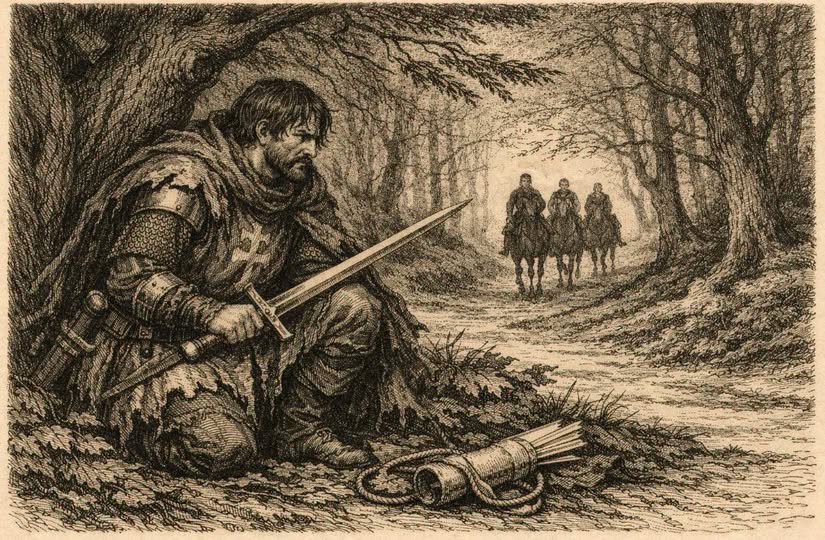
I have posted about Robert de Veer before, but he’s worth revisiting. In the early 1330s he was constable of Rockingham Castle in Northamptonshire and openly sheltered outlaws inside its walls. He played a major role in the Folville–Coterel kidnapping of Justice Richard Willoughby.
His criminal career stretched back years. By 1324–25 his behaviour was such a threat to public order that he appears in the Parliament Rolls.
There we learn he supported the Lancaster rebellion of 1321–22 and travelled with the rebels as far as Burton Bridge. When the rising collapsed, he hid in woodland, living by robbery until the justices had passed, threatening anyone who might indict him. According to the petition, he boasted that he “cared nothing for whatever he does, for he would escape again, as he did then, or die, because there is no law in the land.”
The petition warned that if he were not stopped, others would follow his example and “never will any of the country dare accuse or indict them.”
Even though he later held the office of constable—almost certainly helped by his status as a cadet of the de Vere earls of Oxford—Robert de Veer never abandoned his criminal career.
He remained a feared and notorious figure, a man with no regard for the law or for the damage he caused. More to follow.