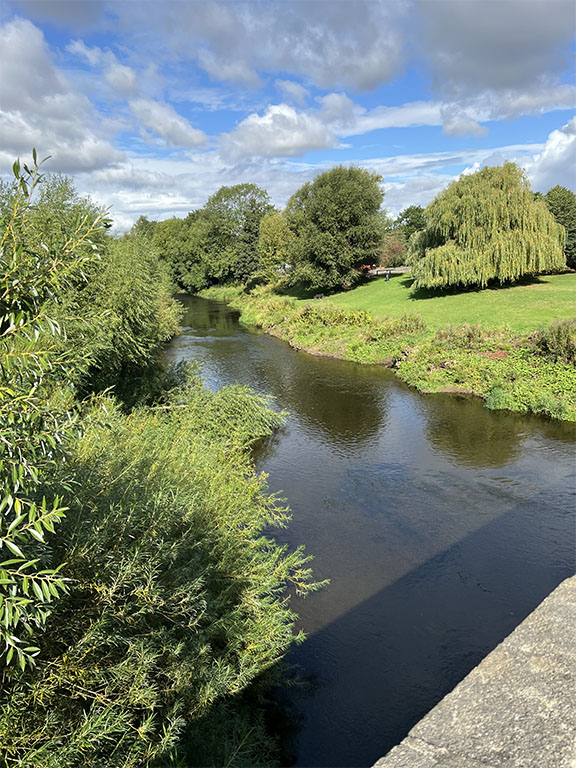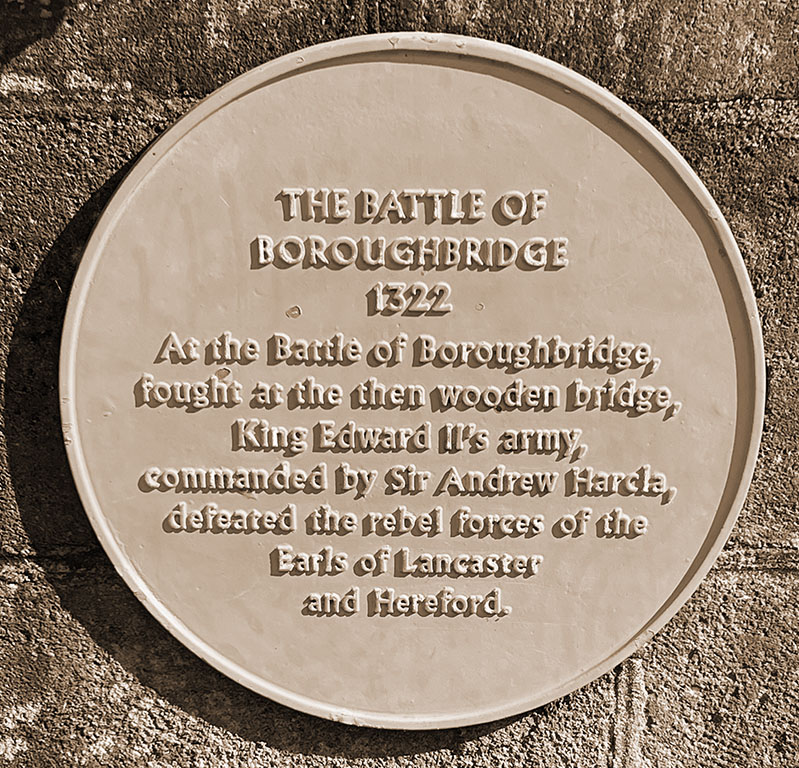
The photograph on the bridge below was taken from the south bank, the same side from which Lancaster approached, while Harclay’s men held the northern bank.
Historians generally believe that the present bridge occupies, or stands very close to, the site of the bridge that featured in the Battle of Boroughbridge in 1322, although the medieval bridge would have been narrower and constructed of wood. A pike head discovered west of the bridge in the 1880s may be one of the few surviving reminders of the fighting that took place here.
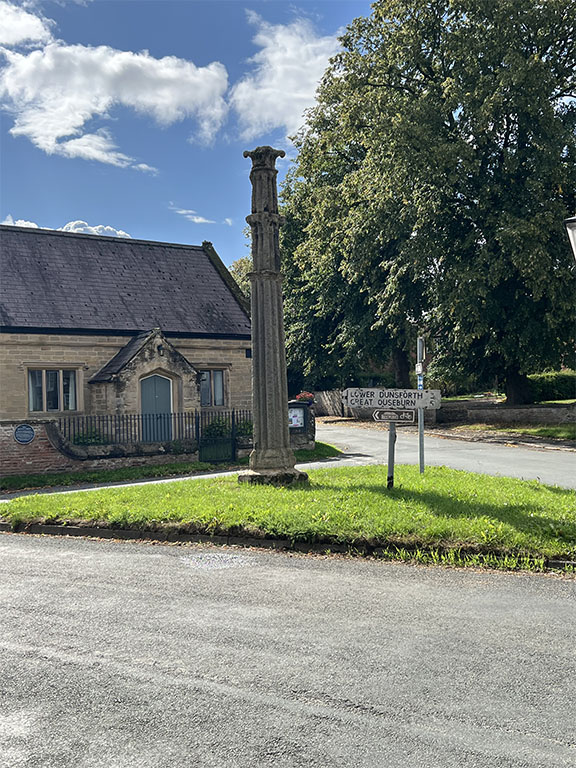
The commemorative Battle Cross dates from the 16th century. It originally stood in Boroughbridge’s market square before being moved to nearby Aldborough in 1852.
Boroughbridge occupies a special place in my narrative of the Coterels. A few weeks after the battle, the Coterels and the Bradbournes received pardons for their adherence to Lancaster’s cause, despite Henry Bradbourne having been executed as a Lancastrian retainer. It seems likely that the Coterels and the surviving Bradbournes abandoned the cause either at Boroughbridge itself or in the days leading up to the battle.
The Bradbournes are known to have served Lancaster as brothers, a common feature of medieval military retinues. The Coterels’ involvement in the rebellion helps explain how they were later able to identify and intercept wealthy Lancastrian fugitives. The scale of the haul suggests insider knowledge of who was travelling, the routes they were taking, and the valuables they carried. When the gang robbed their fellow rebels only days after the rebellion’s collapse, they appear to have known exactly where the richest pickings could be found.