Counterfeiting was a skilled art for the early 14th century criminal. A cast had to be perfected and silver melted and debased so that the coins looked like real ones. This required considerable training, time and capital investment in bullion and instruments.
Coin clipping was also practiced, requiring less skill.
The counterfeiter did not work alone they needed aid in processing and distributing the coins which were often done at local markets and fairs.
If caught the criminal would face charges of treason.
One such man was William Uston, a key member of the Coterel gang in the Peak District. Uston’s false money was used to pay for the goods and services of the neighbourhood and he was even able to acquire rights to a manor in Nottinghamshire.
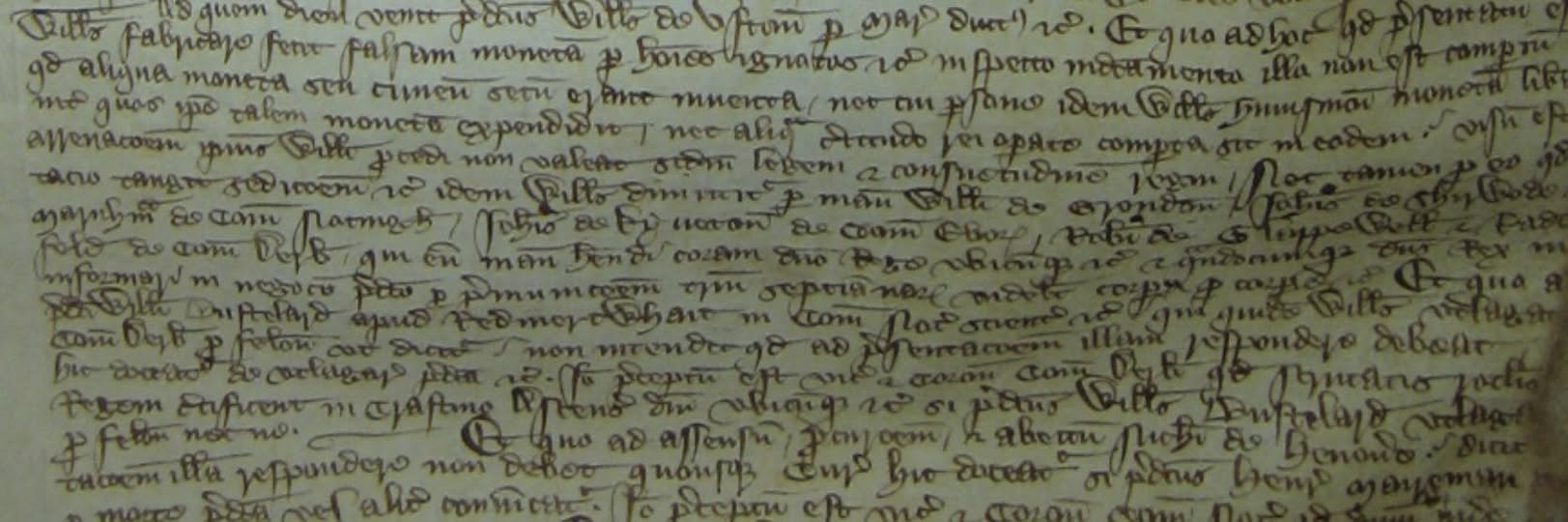
Uston, however, managed to find himself before the king’s court accused of falsifying money. The archival record below tells us that when evidence was sought, no false coins, dies or tools could be found nor any person who received or distributed the coins. There was no “certainty of the act”, and so the case collapsed.
The greatest masters of deception were not only defined by the coins they made, but also by the evidence they made disappear.