Following the Halidon campaign, Edward III became concerned that some indicted felons were claiming the benefit of military pardons despite never having served. Richard Willoughby was tasked with examining such claims before the pardons could be accepted in court. A case I have recently uncovered in my Halidon research shows exactly how that process worked in practice.
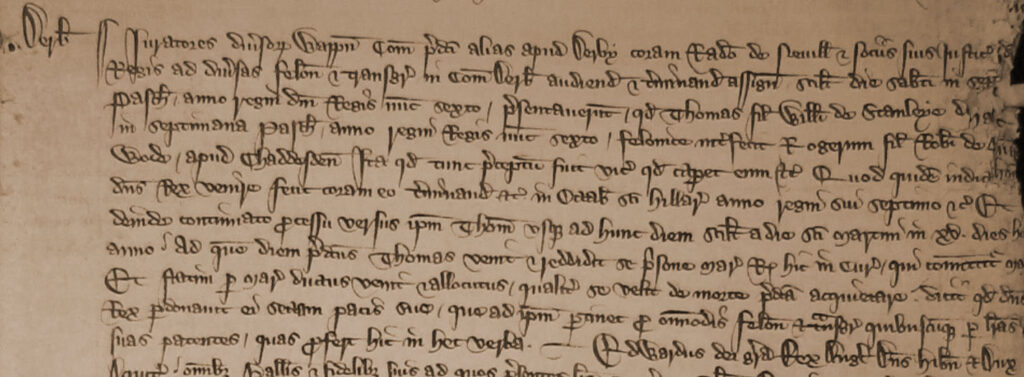
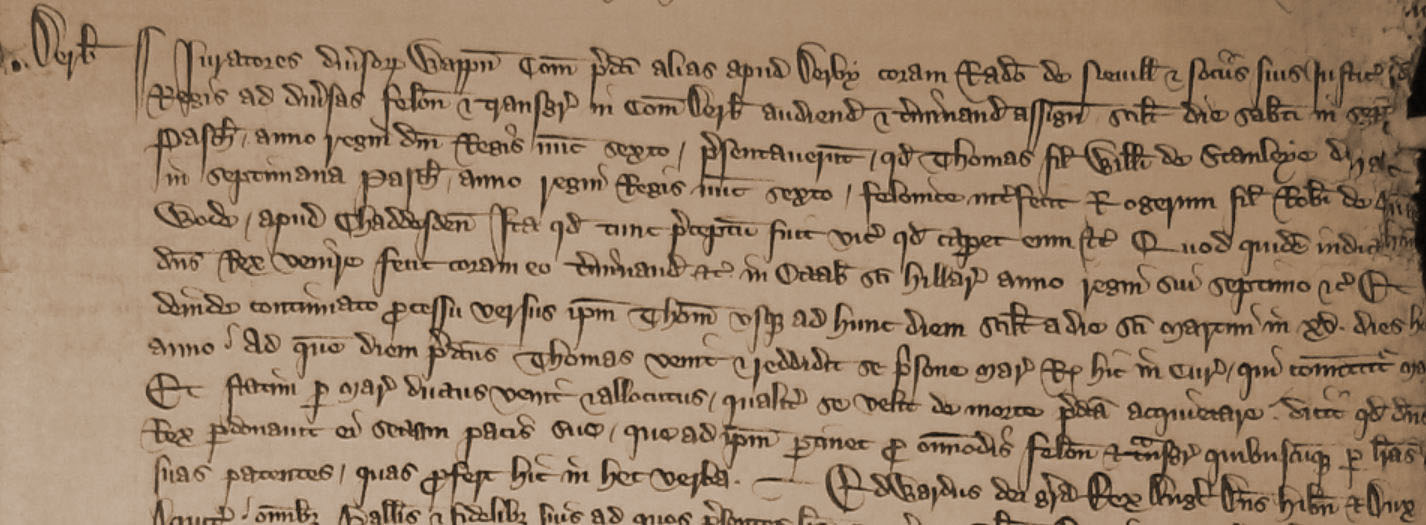
When Thomas son of William de Stanley appeared before King’s Bench, he claimed the benefit of a royal pardon granted for service in the Scottish war. The court, however, was not prepared simply to accept the claim.
The problem was one of identity. The pardon named Thomas de Stanley, while the man before the court was identified as Thomas son of William de Stanley. Before the pardon could be allowed, the court needed to establish that both names referred to the same individual.
To investigate the matter, Richard de Willoughby took an inquiry at Derby. Meanwhile, Thomas was permitted to obtain evidence of his military service. He subsequently returned with a testimonial letter from John de Roos, certifying that he had served at the siege of Berwick, had been present “at the battle”, and had remained until the surrender of the town, all while serving “in the company of the Baron of Stafford”.
The record becomes even more interesting when viewed in its local context. Standing surety for Thomas were James and Nicholas Coterel, amongst other local men of standing. The appearance of the Coterels is particularly noteworthy, as the following King’s Bench entry concerns their own pardon for service in the same Scottish campaign.
The record does not state that the Coterels served under Stafford. Nevertheless, it places them within the same Derbyshire network as a man whose service in Stafford’s company was formally accepted by the court. At a minimum, it suggests a close association between these men that extended from military service into the legal proceedings that followed.
The inquiry ultimately found that Thomas de Stanley and Thomas son of William de Stanley were indeed one and the same person. Having satisfied the court of both his identity and his service, Thomas was discharged, the record concluding that he should “go thence without day”.