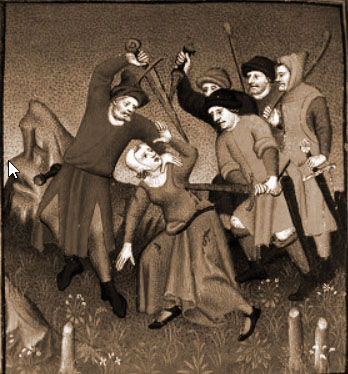
Medieval men sometimes resorted to stealing prospective brides to enrich themselves or raise their social status through advantageous marriages.
In 1331, one such man, John Draycot and his Staffordshire gang along with members of the notorious Coterel gang launched a daring night raid on the manor of Sibil Fourneux in Cartlon-in-Lindrick, Nottinghamshire.
They breached the manors defences and smashed through a wall to gain entry. The raiders beat the household, stole valuables and then turned their attention to their real goal…Sibil’s sister, Joan.
Recently widowed, Joan held lands in Dalby, Lincolnshire and was an heiress to the Lindrick manor.
Fortunately for Joan, she was able to escape to a secure room and the plot was foiled, presumably due to raising the hue and cry.
In the aftermath, the gang received refuge at the home of Roger le Sauvage (a core member of the Coterel gang) who had counselled them in their scheming. Sauvage had insider knowledge, having robbed the manor himself on a previous occasion.
Because 14th century law was structured to address consensual elopements, unwilling victims of bride theft received little meaningful protection.
Joan went on to marry Henry Fitzhugh…willingly as far as is known.